HSV, (also known as HSB or HSL), is a way of specifying colors. It is similar to RGB/RGBA, but instead of stating how much red, green, and blue is in the color, it states the hue, saturation, and value (lightness or brightness) of the color, hence the name, HSV.
Introduction
HSV, (also known as HSB or HSL), is a way of specifying colors. It is similar to RGB/RGBA, but instead of stating how much red, green, and blue is in the color, it states the hue, saturation, and value (lightness or brightness) of the color, hence the name, HSV.
Hue, Saturation, and Value
Hue
Hue is the color or shade of the color—red, green, blue, yellow, etc.
It's expressed as degrees:
- Red falls between 0 and 60 degrees.
- Yellow falls between 61 and 120 degrees.
- Green falls between 121 and 180 degrees.
- Cyan falls between 181 and 240 degrees.
- Blue falls between 241 and 300 degrees.
- Magenta falls between 301 and 360 degrees.
Saturation
Saturation is how much pigmentation is in the color. It can also be described as how pure the color is.
It's used as 0 to 100 percent. Reducing this component toward zero introduces more gray and produces a faded effect.
Sometimes, saturation appears as a range from 0 to 1, where 0 is gray, and 1 is a primary color.
Value
Value, also known as brightness or lightness, is how dark a color is.
Understanding
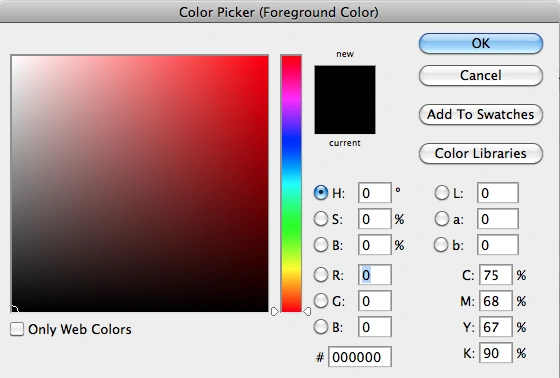
Here's a color picker. Moving to the right, you get more saturation, or color. Moving to the left, you lose color and it goes to gray—which is desaturation. The value would be up and down, and the hue exists on the color bar to the right of the big box.
Recomended Color Picker (external)
Further reading
You can also use other color modes if HSV does not make sense for you. Check out Hex Codes, Named Colors and RGB/RGBA!!